
The reality of unattended death is something most people never have to face, but when it happens, one of the first warning signs is often the smell. If you're reading this, you may have noticed an unusual odour in your building, or you're preparing for the difficult task of dealing with an unattended death. Understanding how decomposition odours travel can help you act quickly and know when to call professionals.
At After Death Cleaners UK, we respond to these situations daily. We know the questions you're asking, and we're here to give you honest, practical answers.
When someone dies, the body immediately begins breaking down. This natural process releases gases that create a distinctive, powerful odour that most people can identify instantly, even if they've never smelled it before. For those who have never experienced it, the question often arises: what does a dead body smell like?
The breakdown happens through bacterial action and enzyme release. Your body contains trillions of bacteria, particularly in the digestive system. When the heart stops beating, these microorganisms spread throughout the body tissues and begin consuming organic matter. This microbial activity produces gases including hydrogen sulfide, cadaverine, putrescine, and dimethyl disulfide.
These chemical compounds are volatile organic compounds, which means they evaporate easily at room temperature and spread through the air. The human olfactory system is extremely sensitive to these particular chemicals. We've evolved to detect them at very low concentrations because recognising decomposition has survival value.
The scent isn't just unpleasant. It's distinct, penetrating, and often described as sweet, sickly, and rotten all at once. Once you've encountered it, you'll never forget it.
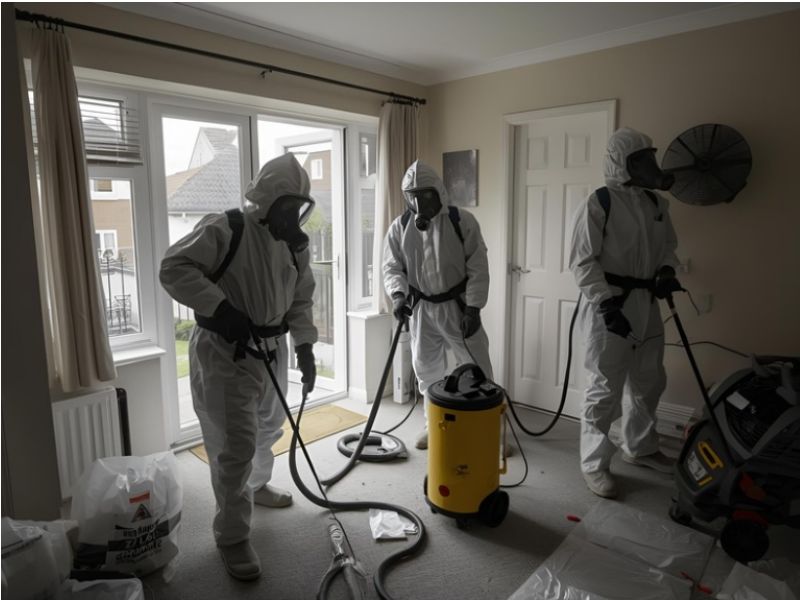
Human decomposition progresses through several stages, and each produces different levels of odour.
Fresh Stage (0-2 days): Immediately after death, the body starts cooling and rigor mortis sets in. At this point, there's minimal smell unless the person died in hot conditions or had certain medical conditions. Most people wouldn't detect anything unusual yet.
Bloat Stage (2-6 days): This is when the bad smell becomes unmistakable. Bacterial action produces enormous amounts of gas, causing the body to swell. The abdomen distends, and pressure builds inside. Gases including hydrogen sulfide and dimethyl trisulfide are released in large quantities. This is typically when neighbours or family members first notice something is wrong. The odour can fill an entire flat within hours during this stage.
Active Decay (6-20 days): The body tissues begin liquefying, and fluids leak out. This is the strongest-smelling phase. Insects are highly active if they can access the body. The smell during active decay is overwhelming and can spread through multi-storey buildings. Forensic science shows this stage produces the highest concentration of volatile organic compounds. Odours are usually strongest between day 2 and day 10 after death.
Advanced Decay (20-50 days): Most soft tissues have broken down. The smell remains strong but starts shifting as different compounds dominate. Fewer VOCs are produced compared to active decay, but the scent is still immediately recognisable.
Skeletonisation: Eventually, only bones, hair, and dried tissue remain. The strong odor diminishes significantly, though certain chemicals can linger in the environment for months.
Understanding these stages helps explain why timing matters so much in decomposition cases.
Inside buildings, the scent of a decomposing human body spreads quickly and can travel surprising distances.
In enclosed spaces such as flats or small homes, odours can become overwhelming within a single room in just hours, and often spread through the entire property within a day or two. The smell seeps through gaps around doors, through ventilation systems, and even through walls over time.
In apartment buildings and terraced homes, the situation becomes more complex. Shared walls, floors, and ceilings allow odour molecules to migrate. Neighbours have reported noticing the smell of an unattended death from several doors away in apartment buildings, especially in warm weather. The smell of a decomposing body can travel tens of metres indoors depending on the building's layout and ventilation.
The gases responsible for the odour, such as hydrogen sulphide, cadaverine, and putrescine, are volatile, meaning they spread easily through air and cling to porous materials. They penetrate soft furnishings, carpets, mattresses, and even paint on walls. This is why professional cleaning is necessary rather than just opening windows.
Ventilation systems can spread the scent rapidly throughout a building. Central heating or air conditioning ducts act as highways for volatile organic compounds. We've attended cases where residents on different floors all detected the smell because it travelled through the building's HVAC system.
Environmental factors inside the property matter too. Ambient temperature plays a huge role. A heated flat in winter will accelerate decomposition and odour spread. High humidity also intensifies the smell and helps it travel further. Low humidity may slow the process slightly but won't stop it.
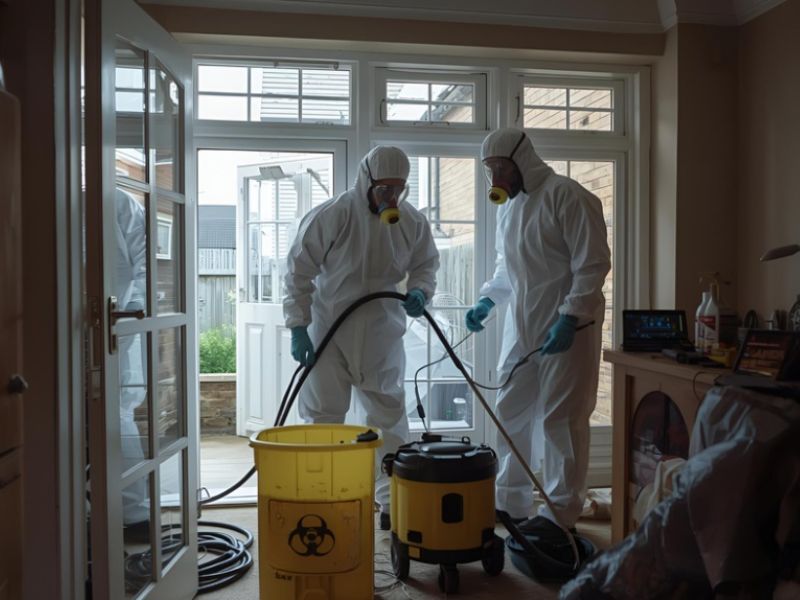
Outside, the situation changes completely. Outdoors, decomposition odours can sometimes be detected over 100 metres away if wind carries the scent. Wind direction and speed are the primary factors determining how far the smell travels in open air.
On a still day with no breeze, the smell might only travel a few dozen metres. But with a steady wind, the scent can carry hundreds of metres downwind from the source. Weather conditions dramatically affect outdoor scent travel. Hot, humid days increase the intensity and spread of decomposition odours. Rain can temporarily suppress the smell by washing some compounds from the air, but it also increases humidity, which accelerates the decomposition process itself.
In rural settings, dead animals (rather than human remains) are more commonly encountered outdoors, but the science of scent travel is the same. Farmers and rural residents are familiar with how far the smell of a decaying animal carcass can travel across fields, particularly in summer.
The body composition also affects outdoor scent intensity. Larger bodies produce more smell. Bodies with higher fat content decompose differently than leaner bodies, producing different fatty acids and chemical compounds during breakdown.
Several factors influence the distance decomposition odours can travel, both indoors and outdoors.
Temperature: Heat dramatically increases odour spread. In hot conditions, decomposition smells intensify quickly and can travel much further than in cooler environments. Hot weather accelerates the decomposition process itself, causing the body to reach the active decay stage faster and produce more volatile organic compounds in a shorter time. Cold temperatures slow everything down, though decomposition never stops completely.
Humidity: High humidity helps odour molecules stay suspended in the air and travel further. It also accelerates bacterial activity in the body, speeding up decomposition. Dry conditions may reduce how far the smell travels, but the decomposing body still produces strong odors.
Airflow: Wind outdoors or ventilation indoors can carry the scent much further than still air. Open windows, fans, and HVAC systems all affect how quickly the smell spreads through a building. In sealed environments, the smell concentrates rather than dissipating.
Environmental Conditions: The surroundings matter. Carpeted rooms trap odour molecules more than rooms with hard floors. Buildings with poor ventilation concentrate the smell. Properties with many absorbent materials like curtains, upholstery, and clothing will retain the scent longer.
Insect Activity: Flies and other insects accelerate decomposition by laying eggs that hatch into larvae (maggots). These feed on the body tissues and speed up the breakdown process, which increases odour production. Insect activity is highest in warm conditions and when insects can access the body.
Individual Factors: Everyone's sense of smell differs slightly. Some people are more sensitive to certain chemicals than others. However, decomposition odours are strong enough that most people will detect them regardless of individual variation. The chemical compounds produced are designed by the natural process to be highly detectable.
The human sense of smell is remarkably attuned to the scent of death. This isn't accidental. Our olfactory system evolved to recognise these certain chemicals at extremely low concentrations because it provided survival advantages to our ancestors.
The distinct odors of decomposition signal danger. Historically, dead bodies could indicate disease, predators, or unsafe areas. People who could detect and avoid these smells were more likely to survive and pass on their genes.
The chemical compounds released during decomposition are particularly volatile and penetrating. Dimethyl disulfide, putrescine, cadaverine, and hydrogen sulfide are all powerful olfactory triggers. They're detectable at concentrations of just a few parts per billion in the air.
Your nose can detect these compounds at much lower levels than most other smells. This is why the scent seems to linger even after cleaning. Tiny amounts remaining in materials can still trigger your olfactory system.
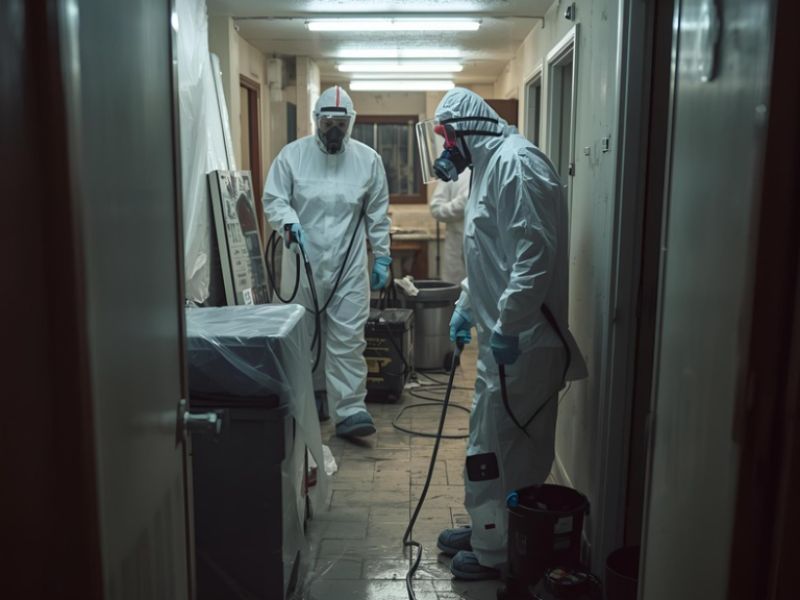
Yes, decomposition odours can and do travel through walls, though the extent depends on the wall construction.
Standard plasterboard walls with wooden studs offer minimal barriers to airborne molecules. The smell passes through small gaps, cracks, and the porous nature of the materials themselves. In apartment buildings with shared walls, residents often detect the smell from neighbouring flats.
Solid brick or concrete walls provide more resistance but don't completely block odour molecules. Given enough time, the smell will permeate even substantial barriers. Shared ventilation systems, pipes, and electrical conduits all provide paths for the scent to travel between units.
The gases responsible for the smell are incredibly small molecules. They can pass through materials that seem completely solid to us. Think of how food smells travel through your home. Decomposition gases work the same way, just much more powerfully.
This is one reason why many after-death cleaning cases are triggered because neighbours detect odours before anyone else realises something is wrong. The decaying body may be hidden from view, but the smell reveals its presence.
While the human nose is sensitive to decomposition odours, professionals use tools that are far more precise.
Cadaver dogs represent the gold standard for detecting human remains. These specially trained animals can locate bodies through walls, underground, and even underwater. Forensic experts often rely on cadaver dogs because they can detect the smell of decomposition at concentrations as low as parts per trillion, far beyond the capability of the human nose.
The dogs are trained to recognise the specific volatile organic compounds released by decomposing human remains. They can differentiate between human and animal decomposition, and they can work in conditions where the visual evidence has been removed or hidden.
Electronic detection equipment also exists. Gas analysers can measure specific compounds like dimethyl trisulfide and other markers of decomposition. These devices are sometimes used in forensic investigations to determine time of death or locate remains.
However, in practical terms, the human sense of smell usually provides the first alert that something is wrong. By the time the smell is strong enough for neighbours to notice, the body has typically been decomposing for at least several days.
Understanding how long before a dead body starts to smell helps explain why some deaths go unnoticed for days or even weeks.
In the first stage immediately after death, there's usually no detectable odour to anyone not in the same room. If someone dies peacefully in their sleep, family members may not notice anything unusual for the first 24 to 48 hours, particularly in cool weather.
The body cools to room temperature (this process is called algor mortis). Rigor mortis causes the muscles to stiffen. But bacteria haven't yet produced enough gas to create a strong smell. Internal organs begin breaking down, but this happens inside the body initially.
For the first day or two, someone entering the room might notice a slight unusual smell, but it's often not immediately recognised as decomposition. It might seem like something has gone off in the fridge or that there's a plumbing problem.
This early stage period is why some deaths in isolated homes aren't discovered quickly. If the deceased lived alone and had limited social contact, there may be no reason for anyone to check on them. The smell doesn't become obvious to neighbours until the bloat stage begins.
Once bloating starts, usually around day two to three in average conditions, the smell becomes unmistakable and spreads rapidly. This is the point where most discoveries occur.
Many people assume that once a body is removed, the smell will disappear. Unfortunately, this isn't the case.
Even after a body is removed, odour molecules can linger in fabrics, carpets, and walls, sometimes making them noticeable long after the initial discovery. The volatile organic compounds have already penetrated porous materials throughout the property. They've been absorbed into wood, plaster, concrete, textiles, and any other absorbent surface.
Blood and bodily fluids may have seeped into floorboards, carpets, or even concrete subfloors. These fluids contain the same compounds producing the smell, and they continue releasing odour molecules for weeks or months if not properly cleaned. Knowing how to clean up bodily fluid spills in such cases is essential, as improper handling allows contamination and odours to persist.
Furniture, mattresses, and carpets that were in the room usually need to be disposed of. The smell penetrates too deeply to be removed by standard cleaning methods. Walls may need treating with specialised products or even repainting with sealant primers.
HVAC systems can hold odour particles. If the smell travelled through ductwork, the entire system may need cleaning or even replacement in severe cases.
This is where professional after-death cleaning becomes necessary. Standard cleaning products and air fresheners don't remove the source of the smell. They temporarily mask it, but the underlying odour returns quickly.
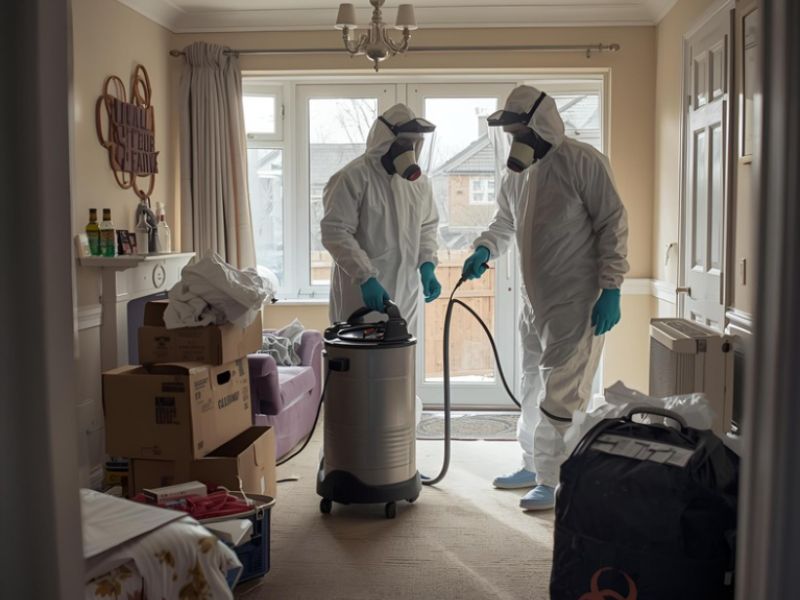
Professional cleaners use industrial-strength biocides, enzyme treatments, and ozone generators to break down the organic compounds at a molecular level. We remove contaminated materials, treat all affected surfaces, and ensure the property is genuinely clean and safe, not just temporarily better-smelling.
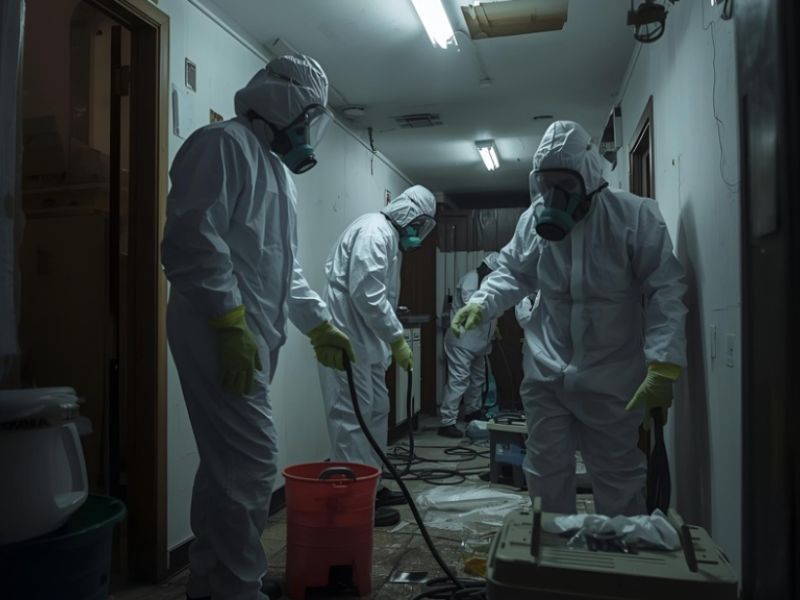
If you're in a situation where a death has occurred near your property, you're probably experiencing a range of emotions and concerns.
The smell itself is distressing. It's not just unpleasant but deeply unsettling on an instinctive level. Your brain recognises what it's detecting, and this triggers natural anxiety and discomfort.
You may worry about health risks. While the smell itself isn't usually dangerous to healthy adults (the gases are present in very small amounts), the situation that caused it requires professional attention. There may be biohazards present that need proper handling, and understanding how to clean up after an unattended death is crucial to restoring safety and peace of mind.
The practical impact is significant. The smell permeates your own property even if the source is next door. Your clothes, furniture, and belongings can absorb the odour. You may find it difficult to sleep, eat, or feel comfortable in your own home.
This is not something you should have to deal with alone. Landlords, property managers, and local authorities have responsibilities in these situations. If the death occurred in a rented property, the landlord must arrange proper cleaning before anyone can safely occupy the space again.
Not every situation requires professional help, but decomposition cases always do.
If you've discovered a body or been informed that a death occurred in your property or nearby, contact specialists immediately. Regular cleaning services aren't trained or equipped to handle biological contamination. They often lack the necessary personal protective equipment and cleaning agents required for safe, effective decontamination. People often wonder who cleans up after a death, and the answer is that it must be trained biohazard professionals, not standard cleaners or grieving families.
After Death Cleaners UK specialises in these exact situations. We understand the process of human decomposition, we know how decomposition odours spread, and we have the tools to properly clean and decontaminate properties affected by unattended death.
We work discreetly and respectfully. We know this is a difficult time, whether the deceased was someone you knew or a neighbour you never met. Our team handles each job with professionalism and sensitivity.
We also handle the disposal of contaminated materials according to regulations. Biohazardous waste can't go in normal rubbish. It requires proper handling and disposal to prevent health risks to waste workers and the public.
When you contact After Death Cleaners UK, here's what happens:
Initial Assessment: We visit the property to assess the extent of contamination. We identify all affected areas, which often extends beyond the room where the death occurred. We look for evidence of fluid spread, areas where the smell has penetrated materials, and any risks that need addressing.
Containment: We seal off the affected area to prevent further spread of odours and contaminants. This protects the rest of the property during cleaning.
Removal of Contaminated Materials: Anything that can't be effectively cleaned needs to go. This typically includes carpets, underlay, mattresses, soft furnishings, and sometimes even floorboards or sections of drywall. We handle all disposal according to regulations.
Deep Cleaning: We clean all remaining surfaces with professional-grade biocides and antimicrobial treatments. Hard surfaces get scrubbed and treated. We clean walls, ceilings, and any other surfaces where odour molecules have settled.
Odour Treatment: We use enzyme treatments that break down organic compounds at a molecular level. Ozone treatment may be necessary for severe cases. This destroys odour molecules rather than just masking them.
Verification: We check our work thoroughly. The smell should be completely gone, not just reduced. If any odour remains, we continue treating until the property is clean.
Restoration: Where necessary, we can coordinate repairs, repainting, and flooring replacement to return the property to a habitable state.
The entire process usually takes several days, depending on how long the body was undiscovered and how far the contamination spread.
People often ask whether the smell of a decomposing body is dangerous to your health. In fact, many wonder can the smell of a decomposing body be harmful, and while the odour itself isn’t usually the direct threat, the conditions that create it often are.
For most healthy adults, brief exposure to decomposition odours isn't medically dangerous. The gases are unpleasant but present in relatively small amounts in the air. You're not going to develop a serious illness from smelling decomposition from a neighbouring flat.
However, prolonged exposure can cause headaches, nausea, and respiratory irritation. These are your body's natural responses to detecting harmful substances. If you're experiencing these symptoms, you should minimise your time in the affected area.
The actual biohazards are different from the smell. Blood and bodily fluids may contain bloodborne pathogens. , which raises questions such as can you get hep c from dried blood. The reality is that surfaces contaminated with these fluids pose real infection risks. This is why professional cleaning with proper protective equipment is necessary.
Bacteria and microorganisms present during decomposition can cause infections if you have direct contact with contaminated materials. This is particularly risky for anyone with a compromised immune system, open wounds, or respiratory conditions.
The psychological impact of the smell shouldn't be dismissed either. It causes genuine distress. This is a normal, healthy response. Your brain is responding appropriately to a signal of danger.
If you've detected the smell of a decomposing human body, time matters.
The longer the situation continues, the worse it becomes. The decaying body continues producing gases and fluids. The contamination spreads further into materials and throughout the building. The smell intensifies and becomes harder to remove.
From a practical standpoint, quick action protects your property and your wellbeing. The sooner professionals can clean the affected area, the less damage occurs and the faster life can return to normal.
From a respectful standpoint, the deceased deserves proper care. No one should remain undiscovered and undisturbed for longer than necessary.
If you've noticed the smell and haven't yet reported it, contact the police non-emergency line. They'll coordinate with the appropriate authorities. If you're a landlord or property owner and you've been informed of a death in your property, contact professional cleaners immediately after the police have finished their investigation and released the scene.
Dealing with the aftermath of unattended death is overwhelming. You need professionals who understand what you're facing and can restore your property quickly, safely, and discreetly.
At After Death Cleaners UK, we've helped hundreds of families, landlords, and property managers through these difficult situations. We know how far decomposition odours can travel, and we know how to eliminate them completely.
We're available 24 hours a day, seven days a week. Death doesn't happen on a schedule, and neither do discoveries. When you need help, we're ready to respond.
Don't try to handle this alone. The smell of a decomposing body can travel tens of metres and linger for months without proper treatment. Professional cleaning isn't just about removing an unpleasant odour. It's about safely decontaminating your property and making it liveable again.
Contact After Death Cleaners UK today for a free, no-obligation quote. We'll assess your situation, explain exactly what needs to be done, and give you a clear price. We work with insurance companies when applicable, and we can start work immediately.
Let us handle the cleaning so you can focus on everything else you're dealing with. Call us now or visit our website to request your free quote. We're here to help.
